
NeuroIntersect Lab

Lead Researcher – Stephanie G. B. Sullivan, DC, PhD
Lab Information
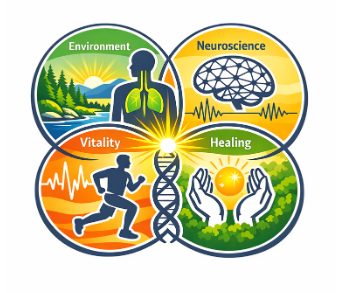
At the heart of the NeuroIntersect Lab is a mission to explore the dynamic connections between environment, vitality, healing, and neuroscience. Through collaborative efforts and engagement of clinicians, patients, scholars, and community members, the lab strives to:
- Produce meaningful, clinically relevant research that supports the health and vitality of individuals and communities.
- Communicate research in a relatable format that promotes integration of knowledge into daily life and clinical practice.
Significant areas of research and communication for the NeuroIntersect research ecosystem are complementary healthcare approaches to solving the well-being and health challenges of frontline workers engaged in community service or defense. Frontline workers are the backbone of our society, providing critical services that ensure public safety, health, and infrastructure. These dedicated professionals operate in high-pressure environments, often facing physical, emotional, and psychological stressors that impact their overall well-being.
Continuing Education courses:
Clinic Notes to Case Report: a Step-by-step Writing Series
Heart Rate Variability and Performance: Linking Physiology, Environment, and Vitality.
Neural Changes with Chiropractic Care: What They Mean for Patient Centered Care (Coming soon)
Projects in Progress
Evaluation of the clinician-patient encounter within chiropractic offices: a practice-based study, Collaboration with ChiroHD
Chiropractic Military Spouse Lifestyle and Employment survey, Collaboration with Dr. Katherine Phillips
Chiropractic in active military and veteran’s care: a scoping review, a multi-site collaboration
Are patient biopsychosocial factors and administrative procedures a barrier to clinical success in active and veteran service members receiving chiropractic care?, a multi-site collaboration
The Healthspan Project: Chiropractic Care’s impact on healing, health span, resilience, responsiveness, and recovery, a collaboration with Drs. Eric Plasker and Ron Hosek
Dr. Stephanie G.B. Sullivan • stephanie.sullivan@life.edu • 770-426-2632
Cognition Lab

Lead Researcher – Tahamina Begum, MBBS, PhD
Lab Information
The Cognition Lab is a comprehensive platform for brain–behavior assessment and research that combines neurophysiological and behavioral measures to evaluate cognitive function in real time. Using event-related potentials (ERPs) and the NIH Toolbox Cognition, Emotion, Motor, and Sensory batteries, the lab assesses attention, memory, executive function, processing speed, emotional functioning, and more. By integrating objective brainwave data with standardized behavioral metrics, we create multidimensional cognitive profiles that support long-term monitoring, treatment evaluation, and the development of personalized, evidence-based care plans.
The lab advances interdisciplinary research in cognitive neuroscience and clinical science. In collaboration with Dr. Dominic Fetterly at NeuroLife Institute, we are conducting a Sports-Related Concussion (SRC) trial using the NIH Toolbox to assess cognitive and functional recovery. Through translational, practice-based research, the Cognition Lab connects neuroscience with chiropractic and complementary health care to improve mental health, cognitive performance, and overall to improve quality of life.

Projects in Progress
The Effects of Chiropractic Applied Clinical Neuroscience Care on Sports-Related Concussion Patients: An Observational Study
The Effect of Chiropractic Care on Adult Depression: A randomized, controlled pilot trial
Effect of Chiropractic Care on Auditory Sensory Gating in Healthy Individuals: An Analysis of the P50 ERP Component
Impact of Single Chiropractic Care on Auditory Sensory Memory in Healthy Individuals Using the Auditory Oddball Paradigm: A Mismatch Negativity (MMN) Component Analysis.
Dr. Tahamina Begum • tahamina.begum@life.edu
NeuroLab
Lead Research – Tyson Perez, DC, PhD
Lab Information
NeuroLab is an innovative research lab dedicated to the assessment of brain function, autonomic regulation, and emotional health across the lifespan from pediatric to adult populations. With a strong emphasis on neuroplasticity (i.e., the nervous system’s capacity to adapt and reorganize in response to internal and external influences), NeuroLab employs a multimodal approach that integrates objective measures (e.g., resting-state EEG, HRV, impedance cardiography, computerized neuropsychological testing) with subjective measures (e.g., parent-reported outcomes, patient-reported outcomes). A core focus of NeuroLab is investigating how complementary and integrative health (CIH) interventions, such as chiropractic care, influence neuroplastic changes and related physiological and psychological markers. Through this holistic framework, NeuroLab aims to advance understanding of mind-body interactions and optimize strategies for enhancing neurological adaptability, emotional regulation, and overall well-being in both children and adults.

Projects in Progress
The effects of chiropractic on children with sensory processing challenges: a pilot observational study
A multimodal integrative health model for children with autism spectrum disorder: a pilot observational study · The impacts of chiropractic care on the biopsychosocial functioning of school-age children: a pilot observational study
Psychoneuroimmunology as a framework for studying the effects of chiropractic care in adults with obesity: a single-arm pilot trial · Differential neurophysiological impacts of real versus sham chiropractic adjustments: a quasi-experimental approach
The effects of chiropractic care on adults with chronic cancer-related fatigue: a pilot trial, on hold
The effects of chiropractic care adjustments on individuals with post-concussion syndrome: a single-arm pilot trial.
Student investigators Dodan, M; Criswell, C; Williams, D
Blinding integrity following multiple sessions of simulated or genuine HVLA manual chiropractic adjustments: a randomized controlled pilot trial, on hold
The role of specificity in spinal manipulation: A pilot randomized cross-over trial comparing neurophysiological outcomes of targeted vs non-targeted force-based manipulations of the thoracic spine, on hold
Reliability of a neuropsychological test battery: a test-retest study
Dr. Tyson Perez • tyson.perez@life.edu
Art of the Adjustment Lab

Lead Researcher – Brent S. Russell, MS, DC
Dr. Brent Russell • brussell@life.edu • (770) 426-2641
SPORT (Sports, Performance, Optimization, Research, and Training) Lab
Lead Researcher – Amber Jackson, DC
Lab Information
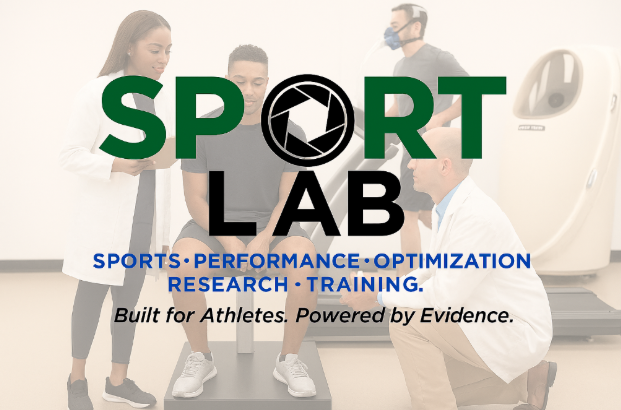
The SPORT lab is an innovation-driven research hub dedicated to advancing athlete health, performance, and evidence-based care. The lab operates under the guiding principle: “Built for Athletes. Powered by Evidence.” The lab is organized into four branches of research, with the SPEED Program (Sports Performance Early Evaluation & Detection) serving as the flagship initiative. SPEED drives innovation in optimizing athletic outcomes through cutting-edge assessments and training strategies. Complementing SPEED are three additional programs: one dedicated to clinical screening and prevention, ensuring early detection of risk factors; another centered on real-world outcomes research, translating data into actionable care models; and a program emphasizing education and workforce development, equipping clinicians, coaches and students with evidence-based tools. Together, these branches create a comprehensive ecosystem for advancing an athlete’s health, performance, and long-term success.
Projects in Progress
Early neurological indicators and escalation thresholds preceding upper-limb injury in former athlete. Sensorimotor recovery following chiropractic care in a traumatic brachial plexus injury: a prospective case report
Dr. Amber Jackson • amber.jackson@life.edu • 770-426-2740
Evolutionary and Functional Anatomy Lab
Lead Researcher – Andrew McIntosh, PhD
The Evolutionary and Functional Anatomy Lab examines how vertebrate musculoskeletal anatomy is structured, functions, and diversifies by integrating 3D imaging, geometric morphometrics, and phylogenetic comparative methods to quantify shape variation and link anatomical form to functional and evolutionary processes.
Projects in Progress
The Influence of Locomotor Mode on Pelvic Shape Evolution in Rodents
(Student investigator: Megan Cronje)
Evolutionary Covariation Between the Pectoral and Pelvic Girdles in Vertebrates
(Student investigator Mahogani Navarrete)
Directional Evolution of Skull Morphology in Domestic Cats
(Student investigator Drew Itumo)
Dr. Andrew MaIntosh • Andrew.mcintosh@life.edu • 770-426-2965
Salutogenic Research Catalyst Lab: Chiropractic, Population Health and Overall Well-Being
Lead Researcher– Christie Kwon, MS, DC, MPH
The research aims of the Lab for Salutogenic Research will focus on vitalistic exploration of the role of chiropractic care in overall well-being and quality of life. Research projects will explore the impact of vertebral subluxation correction on populations, at all stages of life and all stages of health. Dr. Kwon’s background in public health research lends to opportunities to explore the connection between chiropractic and public health concepts such as primary and primordial prevention, epidemiology, and causation. A focus on longitudinal outcomes, objective and subjective indicators of health, and preventative efforts through chiropractic will be hallmarks of each research project in this lab.
Projects in Progress
Get Back to Work: A Study of On-Site Chiropractic Clinic Use by University Employees
The Effects of Chiropractic Care on Inflammation and Quality of Life in People Living with HIV, a Feasibility Study and Pragmatic Trial
(Student investigator Jimenez, M)
Chiropractic Care History, Lifestyle Choices, Stressors and Resiliency: a Cross-Sectional Study
(Student investigator Lippitt, V)
Experience with Chiropractic Care, Health Outcomes, and Quality of Life from 0-18 Years Old
(Student investigator Long, S)
Implementation of Chiropractic Care in a Long-Term Residential Addiction Recovery Program: A Pilot Study
(Student investigator McBride, S)
Potential Efficacy of Chiropractic Care on Gastrointestinal Issues: A Narrative Review with a Feasibility Study
(Student investigator Warner-Campbell, A)
Global Trends and Perspectives in Chiropractic Management of Musculoskeletal Conditions: A Bibliometric Analysis
(Student investigator Zhou, Z)
Dr. Christie Kwon • christie.kwon@life.edu • 770-426-2712
Chiropractic Education & Practice Lab
Lead Researcher – Billy C. Lunsford, BS, DC, MA, CSCS, CCEP, DACO, FIANM
This lab is dedicated to the fusion of understanding how to improve chiropractic education, and aiding practicing chiropractors by understanding symptom presentation, informing assessments, and developing effective treatment plans. Particular areas of interest are enhancing education within the basic, clinical, and chiropractic sciences. Additionally, I hope to discover practical methods for improving patient outcomes within the chiropractor’s office.
Dr. Billy Lunsford • billy.lunsford@life.edu • 770-426-2600
